
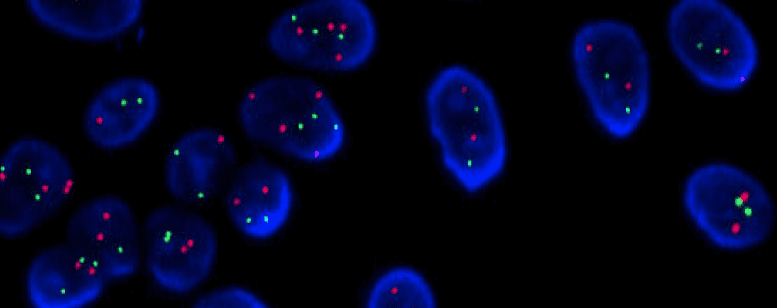
RNA In Situ Hybridization (F/ISH)
GlintLab offers comprehensive RNA In Situ Hybridization (ISH) services, including both fluorescence (FISH) and chromogenic (ISH) detection. With years of experience in technologies like RNAscope™, our team delivers end-to-end support for your RNA visualization needs, helping you achieve accurate and reproducible results.
Why Choose GlintLab for RNA In Situ Hybridization?
- Expertise in Probe and Assay Selection: We guide you in selecting the most appropriate probes and assays for your targets, whether standard or custom designs, ensuring compatibility with your specific research goals.
- Comprehensive Optimization: Our protocols are tailored to maximize signal-to-noise ratios and ensure reliable detection across diverse tissue types and RNA targets.
- Advanced Imaging and Analysis: We provide high-resolution imaging and cutting-edge analysis tools for quantitative and spatial RNA data.


RNA ISH Process
Probe Selection
- Assistance with standard or custom probe design for single or multiple RNA targets.
- Vendor selection support: Choose the best probes from trusted sources like ACD or Molecular Instruments, tailored to the length and type of RNA targets.
Assay Selection
- Selection of appropriate assays based on:
- Target sequence length: Short vs. long RNA targets.
- Expression levels: Channel recommendations for expected target abundance in multiplex assays.
- Assay type: RNA-only assays or RNA + protein detection for combined studies.
- Instrumentation guidance: Recommendations for manual or automated staining using platforms such as Leica Bond and Roche Ventana Discovery Ultra autostainers for high-throughput or complex multiplexing needs.
Staining and Imaging
- RNA integrity validation and high-resolution staining for all test samples.
- Imaging options include:
- Brightfield ISH for chromogenic detection.
- Fluorescent ISH (FISH) for multiplex RNA visualization or RNA-protein co-localization.
- Customizable workflows to fit your experimental design and imaging requirements.
Image Analysis
- Quantitative cell-by-cell RNA expression analysis to deliver actionable insights.
- Spatial RNA analysis capabilities to map gene expression within the tissue architecture.
- Data outputs designed for publication or further computational modeling.

Histopathology Preclinical CRO San Diego
Connect With Us


Related Articles

RNA Scope Probe Design
The technical considerations discussed in rna scope probe design align closely with the capabilities described on this pillar page.

Quantitative RNA Scope FFPE Pathology CRO Services
The technical considerations discussed in quantitative rna scope ffpe pathology cro services align closely with the capabilities described on this pillar page.

Fluorescence In Situ Hybridization: Revolutionizing Scientific Research
The technical considerations discussed in quantitative rna fish align closely with the capabilities described on this pillar page.
In Situ Hybridization Services and Quantitative Analysis in FFPE Tissues
The technical considerations discussed in ish quantitative ffpe align closely with the capabilities described on this pillar page.